


News
Manufacturers of non-standard precision parts
The Precision Revolution of CNC Machining in Automotive, Aerospace and Robotics Industries
Release time:
Oct 21,2026
Views:
17
With the in-depth advancement of the global Industry 4.0 wave, China's manufacturing industry is undergoing a critical transformation from "scale expansion" to "quality improvement". As the core cornerstone of high-end manufacturing, Computer Numerical Control (CNC) machining technology, with its high precision, high efficiency and the ability to form complex geometric shapes, has become a key bridge connecting design and physical objects. Especially in the three cutting-edge fields of automotive parts, aerospace and robot manufacturing, Chinese CNC processing enterprises are reshaping the pattern of the global supply chain with excellent technical strength and strict quality standards.
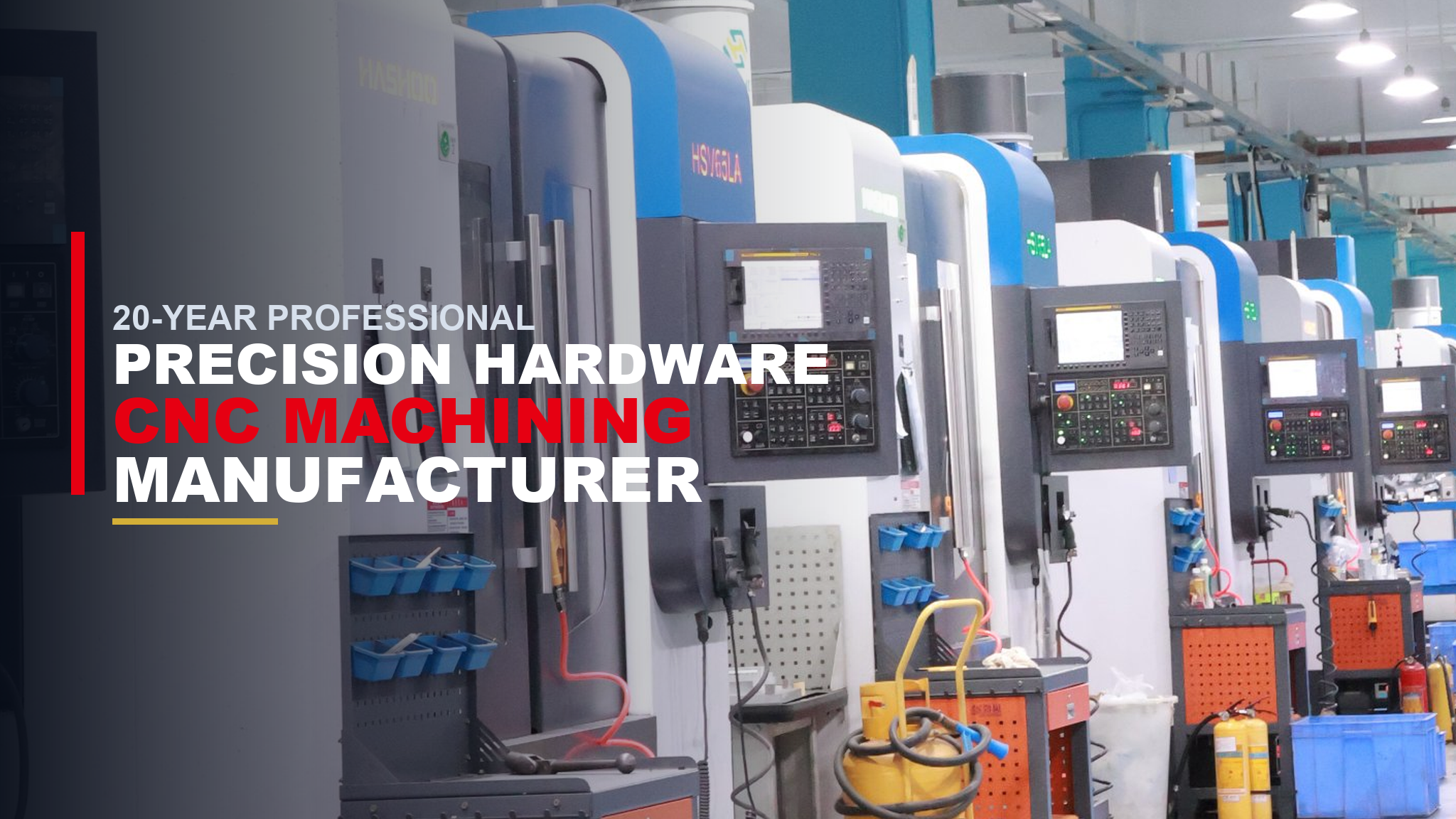
Against the backdrop of the rapid development of the automotive industry, especially new energy vehicles, the importance of CNC machining has become increasingly prominent. Traditional fuel vehicles rely on complex engine components such as crankshafts, camshafts and cylinder heads, which have extremely high requirements for dimensional tolerances and surface finish. New energy vehicles, on the other hand, have brought new manufacturing challenges, with battery housings, motor stators and rotors, and lightweight chassis structural parts becoming the focus of processing. By introducing five-axis simultaneous machining centers, Chinese manufacturers can complete the milling of complex surfaces in one go, which not only greatly shortens the production cycle, but also effectively improves the consistency of parts. The precision machining of materials such as aluminum alloys and high-strength steels enables automobiles to achieve significant weight reduction while maintaining safety, thereby improving energy efficiency. In addition, for safety-critical components such as suspension systems and brake calipers, domestic enterprises have generally established a full-process quality control system to ensure that every product leaving the factory meets international safety standards.
The aerospace industry represents the pinnacle of precision in mechanical processing. The requirements for parts in this industry are almost harsh. They must withstand extreme temperatures, high pressures and severe vibrations, with a zero tolerance for errors. Aircraft fuselage frames, landing gear components, turbine blades and avionics system housings are often made of titanium alloys, superalloys or composite materials. These materials are hard and difficult to machine. Through the application of advanced Electrical Discharge Machining (EDM) and ultra-precision grinding technology, Chinese CNC manufacturing enterprises have successfully broken through the bottlenecks of thin-walled part deformation control and micro-structure machining. For example, in the manufacturing of aero-engine blades, micron-level tolerance control is directly related to the fuel efficiency and service life of the engine. Leading domestic factories already have the ability to handle large-scale integral structural parts, and have passed international aviation quality system certifications such as ISO9001 and AS9100, gradually entering the supply chains of the world's leading aviation giants, demonstrating China's profound accumulation in the field of high-end precision manufacturing.
As the execution terminal of intelligent manufacturing, the improvement of the core competitiveness of the robotics industry is also inseparable from the support of precision machining. Whether it is the joint reducer of an industrial robotic arm, the servo motor housing, or the lightweight skeleton of a collaborative robot, extremely high motion accuracy and repeated positioning accuracy are required. The application of CNC machining in this field is mainly reflected in the manufacturing of complex transmission parts and high-rigidity structural parts. Through 4-axis and 5-axis CNC milling, manufacturers can produce precision parts with complex internal flow channels and external contours, ensuring the stability and durability of robots during high-speed motion. At the same time, with the rise of humanoid robots and medical surgical robots, the demand for processing miniaturized, biocompatible materials (such as PEEK and medical stainless steel) has surged. With flexible customized service capabilities, Chinese processing enterprises can quickly respond to the needs of prototype development and small-batch production, helping the rapid iteration and innovation of robot technology.
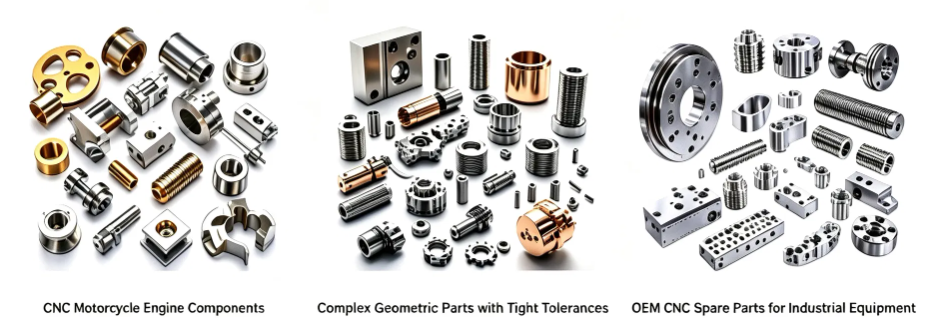
In summary, China's CNC machining manufacturing in the automotive, aerospace and robotics fields is no longer just simple OEM production, but is moving towards a direction of high technological content and high added value. Relying on complete industrial chain supporting facilities, continuous investment in technological R&D, and increasingly strict quality management systems, China has become an indispensable and important force in global precision manufacturing. In the future, with the in-depth integration of intelligent detection technology and digital manufacturing processes, China's CNC machining industry will continue to promote the high-end equipment manufacturing industry to develop to a higher level, contributing Chinese wisdom and Chinese solutions to global industrial progress.
Related News
Custom CNC Machining Solution for Motor Spare Parts & Motor Components
Motor Spare Parts & Motor Components 1. Project Background Global industrial motor, new energy vehicle and UAV manufacturing sectors are raising s...
Custom CNC Machining Solution for Medical Device Spare Parts
The global medical device industry has raised unprecedented strict standards for core spare parts, especially for surgical instrument components, diag
Custom CNC Machining Solution for Industrial Mechanical Spare Parts
1. Global industrial manufacturing sectors including automation equipment, packaging machinery, textile machinery and engineering machinery are...
Custom CNC Machining Solution for AI Robot Core Components
The rapid global expansion of the AI robot industry, covering industrial collaborative robots, autonomous mobile robots (AMR), humanoid service robots

Service Hotline:
Contact
Phone:+86 13622624429 (same as whatsapp)
Email: croesus.lo@xjcmachiningparts.com
Address:No. 8, Haibin Road, Wusha, Chang'an Town, Dongguan, Guangdong, China
QR code

Scan to Visit Our Website


Support: baten.cc
 QR code
 +86 13622624429
 croesus.lo
 croesus.lo@xjcmachiningparts.com
 +86 13622624429